

Sustaining a Watershed That Supports All Life
In the Assawompset Pond Complex and Nemasket River, we're addressing watershed health, water supply and flooding to support people and nature.

Water gently laps up to the shore, which is dotted with marsh grasses and wildflowers. Ducks swim by in scattered groups, perhaps headed to find their next meal or a shady spot to nap. The Assawompset Pond Complex (APC) is five connected ponds that drain to the Nemasket River, making up the APC-Nemasket River sub-watershed. It’s a vital freshwater resource in southeastern Massachusetts.
The system provides drinking water to approximately 250,000 people; high-priority fish, wildlife and plant habitat; important recreational opportunities; and is an anchor for shoreside residential communities. The Nemasket River is a major tributary to the federally designated Wild and Scenic Taunton River, which stretches to Narragansett Bay in Rhode Island, supporting one of the largest herring runs in New England.


A Balancing Act for Water Quality, Quantity and Flow
In recent years, excessive flooding has caused property damage and evacuations, road closures, loss of utilities, septic system failures and economic losses. At other times, droughts have reduced water quantity, quality and flow. And runoff from nearby development and impervious surfaces further degrades water quality. Climate change exacerbates these issues even more, as an increase in intensity and frequency of storms and precipitation, in addition to more extreme heat events, worsens flooding, pollution and drought.
The ponds, river and surrounding lands are critical fish and wildlife habitat, but they have been fragmented by dams, roads, neighborhoods and other human activity. Historically, the Nemasket River has been one of the most important and high-volume herring runs on the Atlantic Coast. Unfortunately, in some recent years, those counts had dropped significantly, possibly from a combination of drought conditions, river barriers, invasive aquatic plants and degraded water quality.
By 2030: Helping People & Restoring Healthy Rivers
Addressing challenges like these is a priority for organizations like The Nature Conservancy—by 2030, we’re aiming to help 100 million people globally by protecting and restoring natural habitats that help safeguard communities from storm surge, extreme rainfall, severe wildfires and sea-level rise. We're also restoring healthy rivers, lakes and wetlands to improve the quality and amount of water available in freshwater ecosystems for both natural and human communities. Working in the APC-Nemasket system moves us toward both those goals.
Want to learn more about initiatives like this?
Sign up for our e-newsletter to get monthly updates on our work across the Bay State.
Watershed-Scale Planning for Management and Adaptation
In 2022, under guidance of the APC Management Team—a longstanding collaborative body made up of municipal representatives, Herring Commission members, Taunton and New Bedford water suppliers, and state agencies—the Southeastern Regional Planning and Economic Development District (SRPEDD) and partners including TNC developed a Watershed Management and Climate Action Plan for the system. The Plan evaluates and recommends management actions to balance the needs of maintaining water supply; improving river connectivity, flow and water quality; reducing flood and drought hazards; and restoring ecological integrity—for both current impacts and those expected to worsen with climate change.
A Plan for the APC-Nemasket System
Explore the management & climate action plan hereQuote: Marea Gabriel

The APC sits within the larger Taunton River Watershed, where TNC has worked for decades. By collaborating at a watershed scale and considering future impacts of climate change on the natural systems on which we rely, we can build more durable solutions that can be expanded to other regions.
People & Nature
Identifying and tackling these threats while balancing human and natural needs is a challenge. For example, because the ponds are a public water supply, a priority for water suppliers is to maintain pond levels at a certain height, ensuring they can serve residents who need water for their daily lives. However, with increased precipitation and barriers to flow, high water levels have led to excessive flooding, which is detrimental to both the workings of nearby infrastructure and the habitat.
The Watershed Management and Climate Action Plan was partially funded by the state’s Municipal Vulnerability Preparedness program, which helps cities and towns plan for and take action to address climate impacts. Through public meetings guided by SRPEDD, consultants, TNC and others, communities discussed potential holistic solutions to balance the many aspects of the system. The team then modeled future scenarios to predict how various mitigation strategies would perform and solicited public input to help assess and prioritize which actions to implement.
“It’s important to bring the surrounding communities together to address the challenges throughout the APC-Nemasket system, to identify solutions that secure drinking water supply and reduce flood risk, while ensuring the protection of the ecosystem and its species, like river herring, mussels and birds,” says Jeffrey Walker, executive director of SRPEDD, which represents 27 cities and towns around the affected watershed.

Taking Action Across the Watershed
The final Watershed Management and Climate Action Plan identified 12 priority actions. These include channel and wetland restoration in the upper Nemasket River, invasive aquatic plant removal, Snake River culvert evaluation, a potential dam removal and another dam upgrade, working with landowners along Long Pond and the Nemasket River to implement nutrient reduction best management practices, and land acquisition.
Local groups and project team members are now investigating and implementing these priority actions with state funding secured by SRPEDD and financial backing raised by TNC from a local foundation. TNC is also providing resources and support to integrate both nature-based solutions and gray infrastructure into those actions, balancing the needs of nature and people.

“Enhancing or using nature to address these issues may have higher up-front costs but can result in sustainable long-term solutions and savings,” says Gabriel. “Many municipalities don’t have the capacity or funding needed, which is where TNC can play a role.”
This undertaking in the APC-Nemasket Watershed is a prime example showing that when communities come together and utilize solutions from nature, there is power to address even some of the most daunting challenges.
“We’re excited to be able to work toward our goals to help communities and conserve freshwater systems through partnership and cross-functional collaboration,” says Gabriel.
Explore Some of the Projects Underway
Restoring the Nemasket River
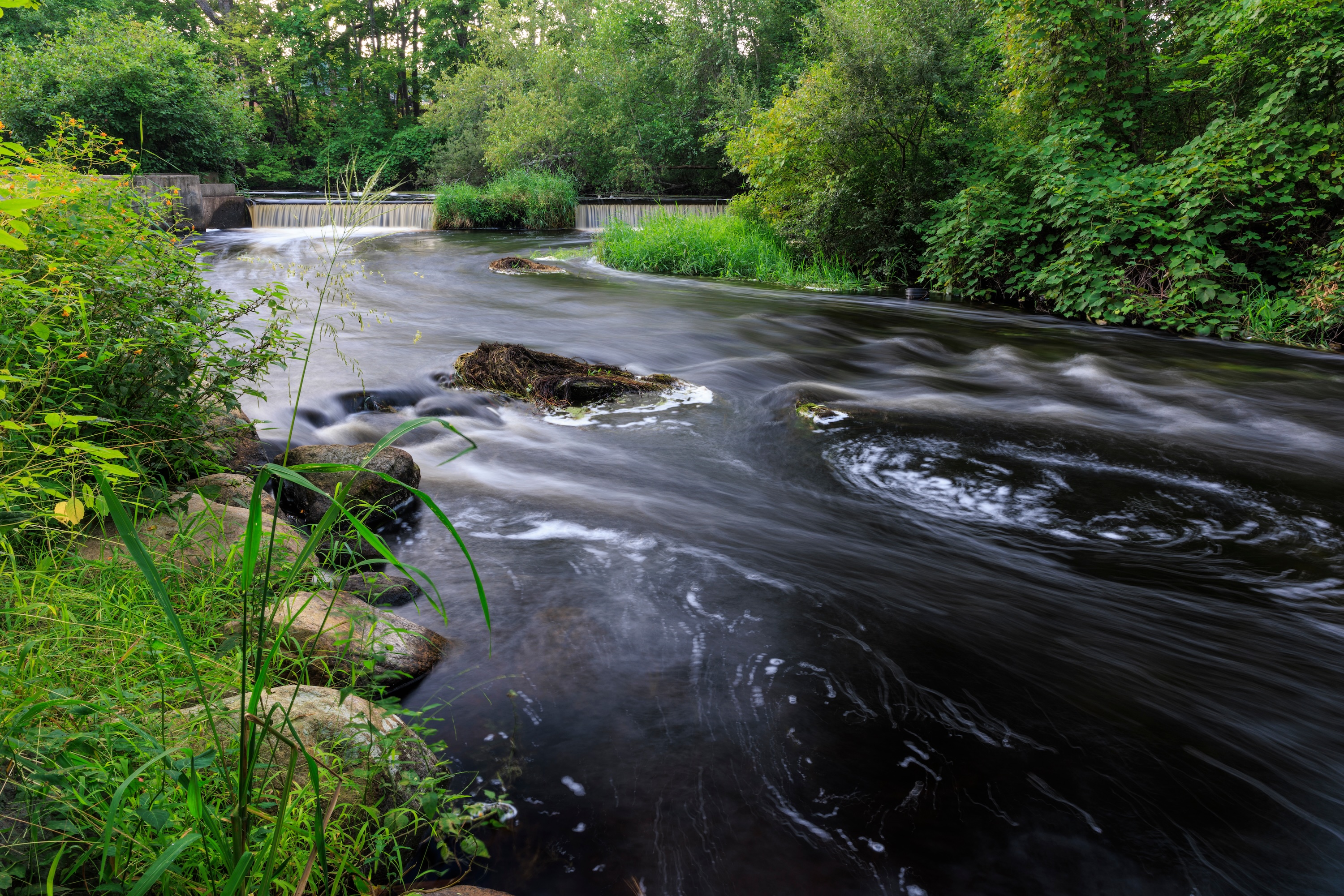
River herring migrate upstream each spring from Narragansett Bay via the Taunton and Nemasket rivers to spawn in the 5,000-acre Assawompset Ponds Complex—the largest spawning and nursery habitat in Massachusetts. Adult river herring counts at the Wareham Street fishway on the Nemasket River during spring runs have averaged over 500,000 fish since 1996. However, both the upstream and downstream herring migrations have been challenged more recently by barriers to fish passage including reduced pond outflow and river flow as well as invasive plants and buildup of sediment in the river channel. In the 2022-2024 spring runs, herring counts declined.
The Watershed Management and Climate Action Plan builds off an expansive planning effort completed in 2022 that included an Upper Nemasket River Hydrologic and Hydraulic Modeling (H&H) Study. The study evaluated 22 different restoration scenarios along the section of river between the Wareham Street and Assawompset Pond dams and recommended several priority actions, including:
- Removal of the Wareham Street Dam to restore flow and fish passage and reduce flooding
- Restoration of the uppermost reach of the Nemasket River to resemble more natural channel dimensions
- Replacement of the Assawompset Pond dam to improve operability and reduce flooding
- Replacement (or removal, where feasible) of several undersized bridges along the Nemasket River
The upper Nemasket River channel restoration will happen first to help address the historical effects of overwidening of the river channel, particularly near the Assawompset Pond dam, which has resulted in increased channel sedimentation and growth of dense aquatic vegetation. The results of the 2022 study indicate that this project will complement the other priority restoration projects and, particularly, it would benefit from removal of the Wareham Street Dam.
“Removal of invasive weeds and sedimentation will materially improve river flow, allowing migrating adult river herring an easier trip from the sea to the spawning grounds of the APC,” said David Cavanaugh and Thomas Barron, Wardens of the Middleborough-Lakeville Herring Fishery Commission. “This will benefit the health of the river.”
The first step in the process was completed in summer 2024—Horsley Witten Group, Inc. developed initial design and engineering plans to help restore the natural conditions of the first 1,200 feet of the Nemasket River, near its outlet from Assawompset Pond, to improve passage for fish and other aquatic species; restore natural river flow and sediment movement; enhance ecosystem processes; and reduce flooding. Finalizing design/engineering plans and planning for implementation and fundraising are taking place through 2025 and 2026.
Prior to the restoration work, the excessive milfoil in the river must be addressed. The aquatic weed is choking river flow and depleting critical dissolved oxygen on which other aquatic plants and animals rely. In August 2024, the Middleborough-Lakeville Herring Fishery Commission used an eco-harvester to remove 275 cubic yards of milfoil from the channel. Fish, flow and paddlers can now move more freely through this wide, cleared swath. This was a repeat of initial pilot test efforts conducted in 2021, which removed 120 cubic yards of milfoil—48 loads in the bed of a standard pickup truck! Another weed removal will happen in summer 2026, supported by funding TNC secured from a local foundation.
Addressing a Polluted Pond
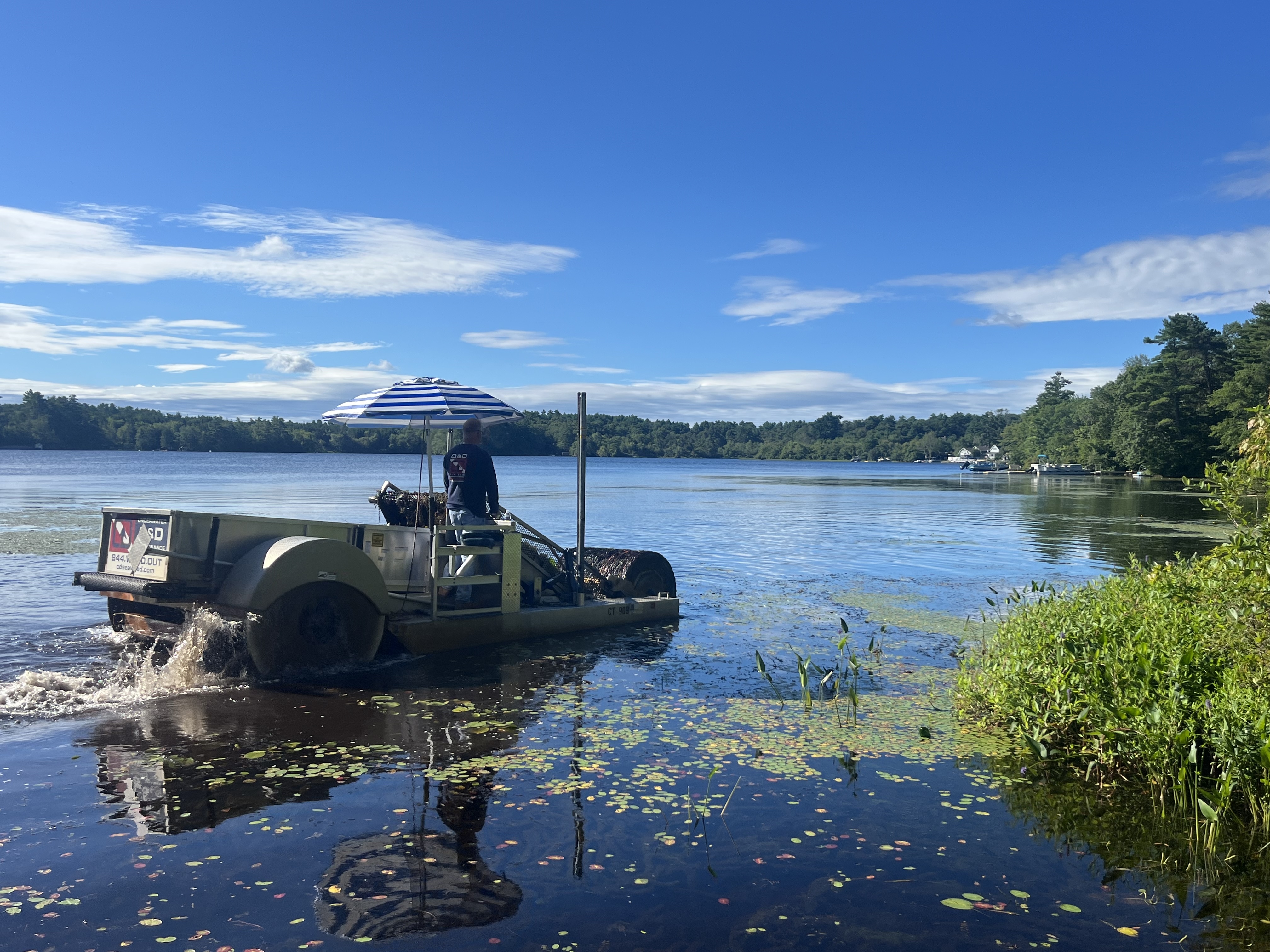
A non-native invasive plant takeover—fueled by excess nutrients coming from sources like fertilizer, septic systems and runoff from developed areas—is happening on Long Pond, one of the APC’s five ponds that straddles Lakeville and East Freetown. As an intervention, for a week in August of 2022 and 2023, a tractor-like vehicle known as an eco-harvester rolled through the water, a rotating drum and conveyor belt system on the back pulling up invasive plants from the pond bottom by the root and collecting them for removal.
In 2024, the Long Pond Association implemented the use of diver-assisted suction harvesting—when divers target plants from the root and feed them into a suction hose on an awaiting boat. Both these manual methods are more targeted, and avoid the use of chemical herbicides, to protect the water supply, fish and wildlife.
This type of intervention—that addresses the symptom of the issue—is needed to support the pond’s ecosystem, as well as recreational use, in the current moment. Going forward, the watershed plan also identified several priority actions to help address the cause of the issue. One such action includes engaging willing Long Pond landowners in implementing best management practices to reduce chemicals and fertilizers on their properties, so they don’t end up in the pond. Cumulative impacts from these chemicals can have serious impacts on aquatic health and fuel invasive plant growth.
These practices can look like establishing riparian buffers—native plants along the pond shore that slow runoff and filter pollutants out of the water—and maintaining septic systems to prevent household wastewater, with solids, bacteria and nutrients, from reaching the pond. In 2023, landowners attended a series of Long Pond Friendly Living workshops—hosted by SRPEDD, the Towns of Lakeville and Freetown, the Lond Pond Association and Save The Bay—and a property owner volunteered to have a riparian buffer installed on her property. This effort is currently continuing along the upper Nemasket River.
Another measure being investigated is the use of permeable reactive barriers (PRBs) at strategic locations adjacent to waterbodies to filter nutrients out of groundwater before they reach a pond.

Stay in the Loop!
Learn more about our progress in the APC-Nemasket River watershed and more.
Communities and Nature

On the River to Recovery
At one point, the Mill River was declared "dead." In 2018, alewife ran the river again for the first time in two centuries and have increased in numbers since.

Towns Take Action
Nearly all of Massachusetts' cities and towns are participating in the Municipal Vulnerability Preparedness program to strengthen their response to climate-change-exacerbated challenges.

Experimental Solutions to Reduce Nitrogen Pollution on Cape Cod
Too much nitrogen in our waterways threatens our drinking water, economy, recreation opportunities and human health. New pilot programs are working with nature to change that.