


Wyoming Annual Report 2025
Read about our achievements over the past year—for nature and people.
Download
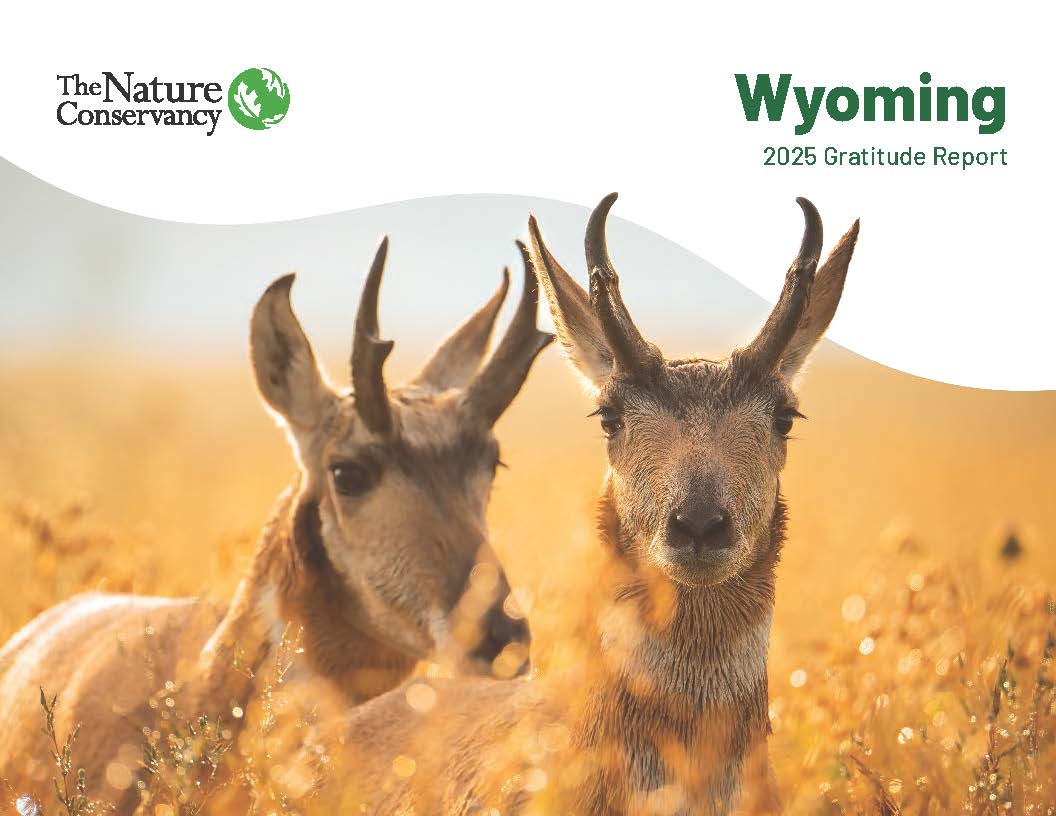
Your support creates large-scale, lasting benefits for wild and working lands across Wyoming.
DownloadQuote: Hayley Mortimer
From the bottom of my heart, thank you for all you do to conserve Wyoming. Your impact ripples far beyond our state’s borders—across the West and across generations. And that gives me a great deal of hope.

Inside the Downloadable Report
From the Director
Hayley Mortimer shares about her year and hope for the future.
Crossing to Safety
An iconic pronghorn migration gets an assist from science.
Holding the Line on Cheatgrass
Targeting invasive grasses protects Greater Yellowstone wildlife.
Recharging the Colorado River Basin, One Wet Meadow at a Time
Slowing runoff and erosion allows water to replenish underground aquifers.
Crow Youth on a Quest
Indigenous youth reconnect with nature, language and culture in a program at TNC's Tensleep Preserve.
Capturing Carbon from the Air
A promising new technology offers Wyoming a chance to lead the next generation of climate solutions.
Stories from the Report

Crossing to Safety
In a state brimming with wildlife, the Carter Mountain pronghorn herd is particularly notable. As the highest‑elevation pronghorn herd in the world, it also migrates right through Cody’s backyard. The pronghorn navigate a 60‑mile route from alpine meadows to the broad Sagebrush Sea below—traversing public and private land along the way.
And although they are the second‑fastest land animals on Earth, pronghorn are lousy at jumping fences. So when they jump, it is common for them to get entangled in the fence wires, which can result in heartbreaking starvation or predation. Yet when they try to crawl underneath fences, as they prefer, they can endure barbed‑wire injuries that can lead to disease and death.
Unfortunately, the Carter Mountain pronghorn path is crisscrossed with fences, as well as a high‑speed highway—Route 120—between Cody and Meeteetse. Crossing the highway can prove deadly for the animals and extremely dangerous for motorists.
“It’s not just the fatalities, but the stress caused by the obstacles to the animals’ movement,” says Kimi Zamuda, TNC’s local initiatives coordinator. “We need solutions for the safety of both people and wildlife.”
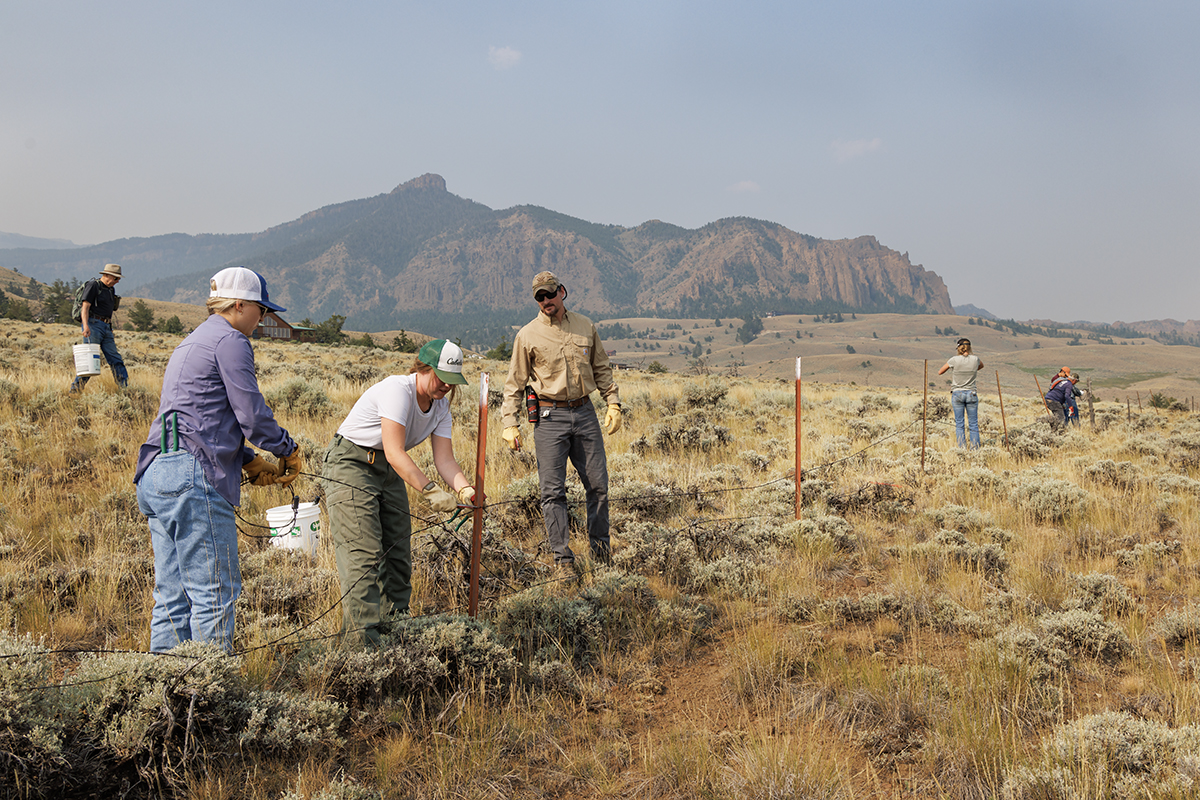
For more than five years, TNC has been working as part of the Absaroka Fence Initiative to find affordable and innovative ways to either remove or modify fences to clear the path. Armed with data from hundreds of collared animals and remote cameras, TNC and partners have been able to map out specific migration routes and pinpoint highway‑crossing hotspots.
“The Nature Conservancy’s science‑based approach, combined with the expertise and skills of our partners, have come together in a way that allows us to widen our scope—getting a full picture of the problems and forming both short‑ and long‑term solutions,” Zamuda explains.
This year, a number of fence modifications have made the Carter Mountain migration safer and easier. Additional cameras have been added to track their movements. The research team will collect data through next year to see how wildlife and livestock navigate through experimental fence designs and share that information with state and local wildlife and highway officials. The recommendations may also result in the temporary posting of new electronic highway signs during the height of the migration.
The best long‑term solution would be construction of highway under‑ or overpasses, but highway projects of that magnitude can easily take 10 to 15 years. In the meantime, science‑guided fence modifications will keep the Carter Mountain pronghorn herd—and people—safer.
TNC donors like you provide for this important research, making wildlife and Wyoming motorists safer. Thank you.
Holding the Line on Cheatgrass
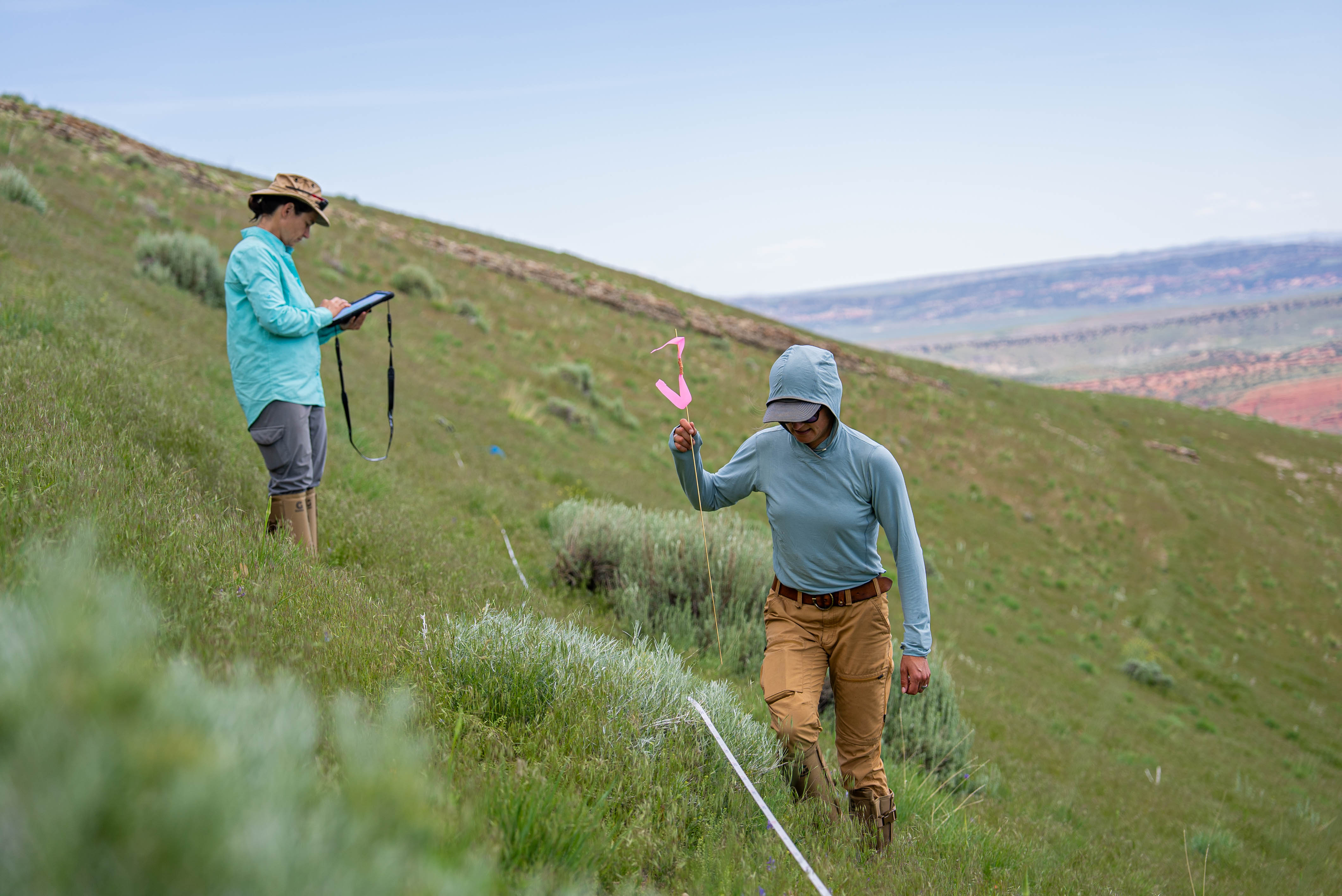
On a sagebrush‑dotted hillside adjacent to TNC’s Red Canyon Ranch, Dr. Corinna Riginos and Charlotte Cadow gear up for work. Special shin guards protect against rattlesnake bites while hoods and hats guard against Wyoming’s scorching sun. For weeks, the team has been hiking slopes like this to map the leading edge where cheatgrass, one of Wyoming’s most pernicious and dangerous invasive species, is spreading into new areas around the Wind River Range and the rest of the wildlife‑rich Greater Yellowstone Ecosystem.
Cheatgrass is a crafty invader. It gains an edge by greening up and setting seeds earlier than native plants, “cheating” the system of water and nutrients. Once it dries out, cheatgrass becomes highly flammable, fueling fast‑moving wildfires that are difficult to control. Because it’s unpalatable and lacks nutritional value once dry, cheatgrass is threatening Wyoming’s beloved wildlife as well as livestock—which are so much a part of the state’s economy.
This invasive annual grass is the major reason we are losing sagebrush habitat across the West at the alarming rate of one million acres each year. Hotter, drier conditions are also allowing cheatgrass to reach into forests, further reducing forage and raising forest fire risk.
Riginos, TNC’s Wyoming director of science, and her team are tackling the problem head‑on yet pragmatically. “We can’t eradicate cheatgrass entirely, but we can stop it from invading areas where it hasn’t already spread.” With the support of TNC donors, Riginos, Cadow and Dr. Courtney Larson are working across the Red Canyon Ranch and Sweetwater preserves, as well as on public and Tribal lands, to identify the leading edge of the invasion on the Wind River Front and other parts of the Greater Yellowstone Ecosystem. The goal is to “hold the line” against further spread.
Their work is so crucial that it has been recognized with the prestigious Camp Monaco Prize. The award was established by the Buffalo Bill Center of the West’s Draper Natural History Museum and the Prince Albert II of Monaco Foundation to foster native biodiversity conservation in the ecosystem through innovative scientific research, management action and public outreach that carries global, as well as regional, implications.
So far, the cooler climate of the Greater Yellowstone has slowed the spread of cheatgrass, but it is essential to put the brakes on it now. If left unchecked, cheatgrass may jeopardize the region’s magnificent wildlife and could severely impact tourism, recreation and ranching.
Says Cadow, “Continuing this research has real potential to conserve what makes the Greater Yellowstone so unique and important.”
Wet Meadow Restoration
In the arid Upper Colorado River Basin, water conservation work is never easy. But for Sublette County Conservation District Senior Natural Resource Technician Kamryn Kozisek, a new skid‑steer funded in part by TNC has made the work of hauling thousands of rocks a little less back‑breaking.
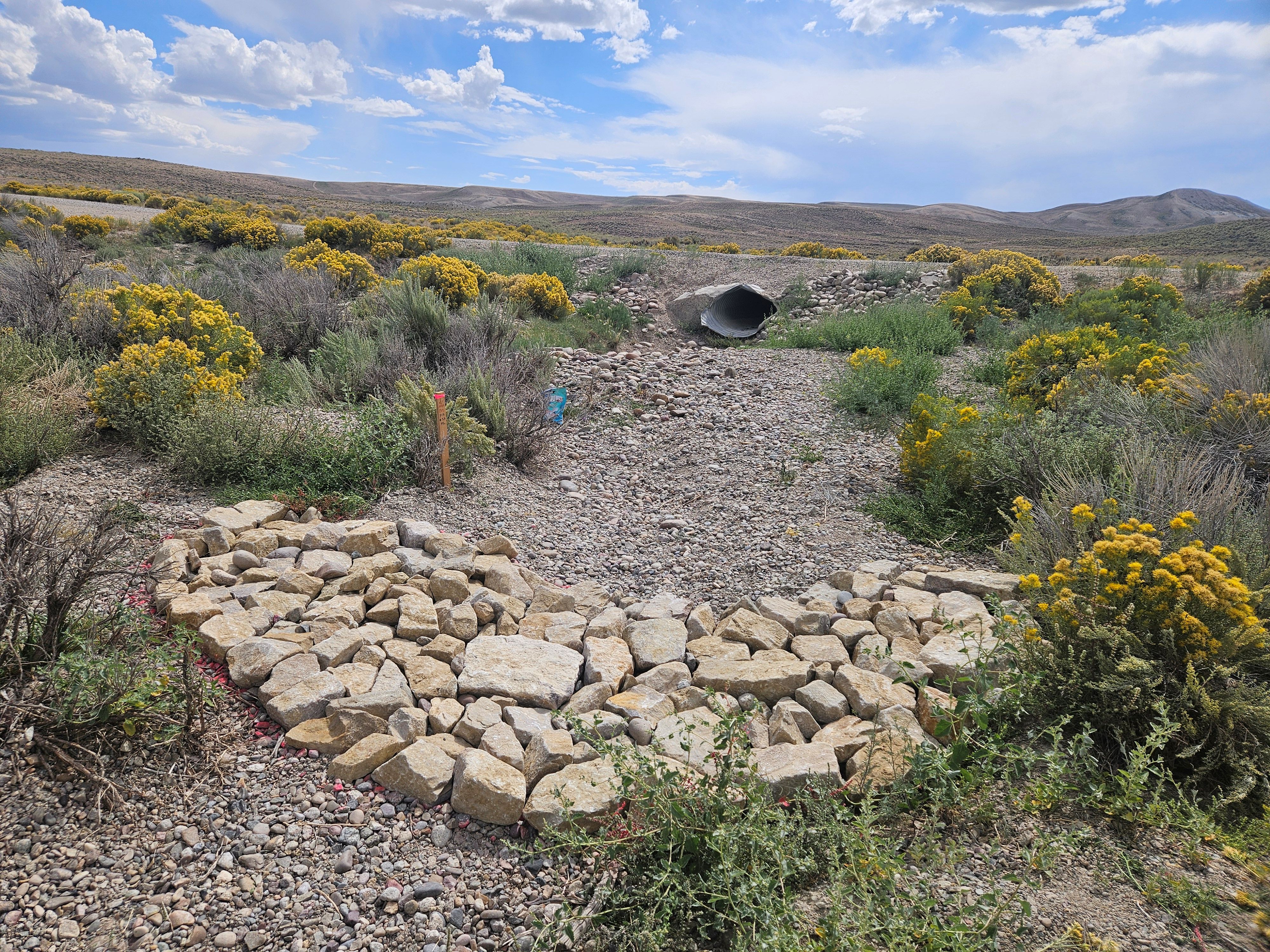
Putting the skid‑steer to work alongside a new dump trailer and plenty of muscle, Kozisek and her partners have completed almost 350 wet meadow structures in the Pinedale area since 2024. Another 450 are currently in the works. These rocky structures trap water in low spots throughout the sagebrush scrubland, slowing runoff and erosion while allowing water to replenish underground aquifers.
On the surface, the wet meadows provide wildlife with access to all‑important water and nourishing native grasses. Oases like this can spell the difference between life and death for sage‑grouse, mule deer and other wildlife in this dry southern portion of the Greater Yellowstone Ecosystem.
The wet meadows are part of a large‑scale effort to use nature itself to improve wildlife habitat, reduce flooding and protect groundwater throughout the Colorado River Basin. A similarly simple‑to‑build structure, called a beaver dam analog, slows water flow in streams by using branches and sticks to mimic a beaver dam. Kozisek and her team have already constructed more than 30 of those.
Last year, TNC and the Bureau of Land Management forged a seven‑state agreement that is expected to deliver $2 million in federal funds for the project in Wyoming, which TNC will then put to work on the ground through a partnership with the Sublette County Conservation District.
Kozisek’s end goal is thousands of wet meadow and beaver dam analog structures completed in Wyoming by 2030. While each individual structure has a small footprint, together they will work like a vast series of sponges, soaking up vital water during the short spring runoff season, holding it in natural pools and wetlands into the summer, and delivering it back into streams well into the fall—a period that is becoming increasingly unpredictable as rain patterns change and winter snows arrive later in the year.
People and wildlife are already benefiting from this work. When combined with related efforts across other Colorado River Basin states, these projects impact roughly 40 million people who depend on water from the Basin. For hunting and outdoor tourism, healthier wildlife populations are an obvious boon. But the wet habitats also benefit ranchers, whose livestock have better access to water and healthier forage. By protecting groundwater and stream flow, the structures help keep water available to irrigate crops downstream. And that keeps fruits and vegetables flowing from one of America’s most productive agricultural regions to supermarkets around the country.
By applying global expertise to efforts in local communities, TNC is unique in its ability to tackle large‑scale challenges like keeping water available in the Colorado River Basin.
You make it possible to develop these far‑reaching efforts and invest in local partnerships to ensure their success.
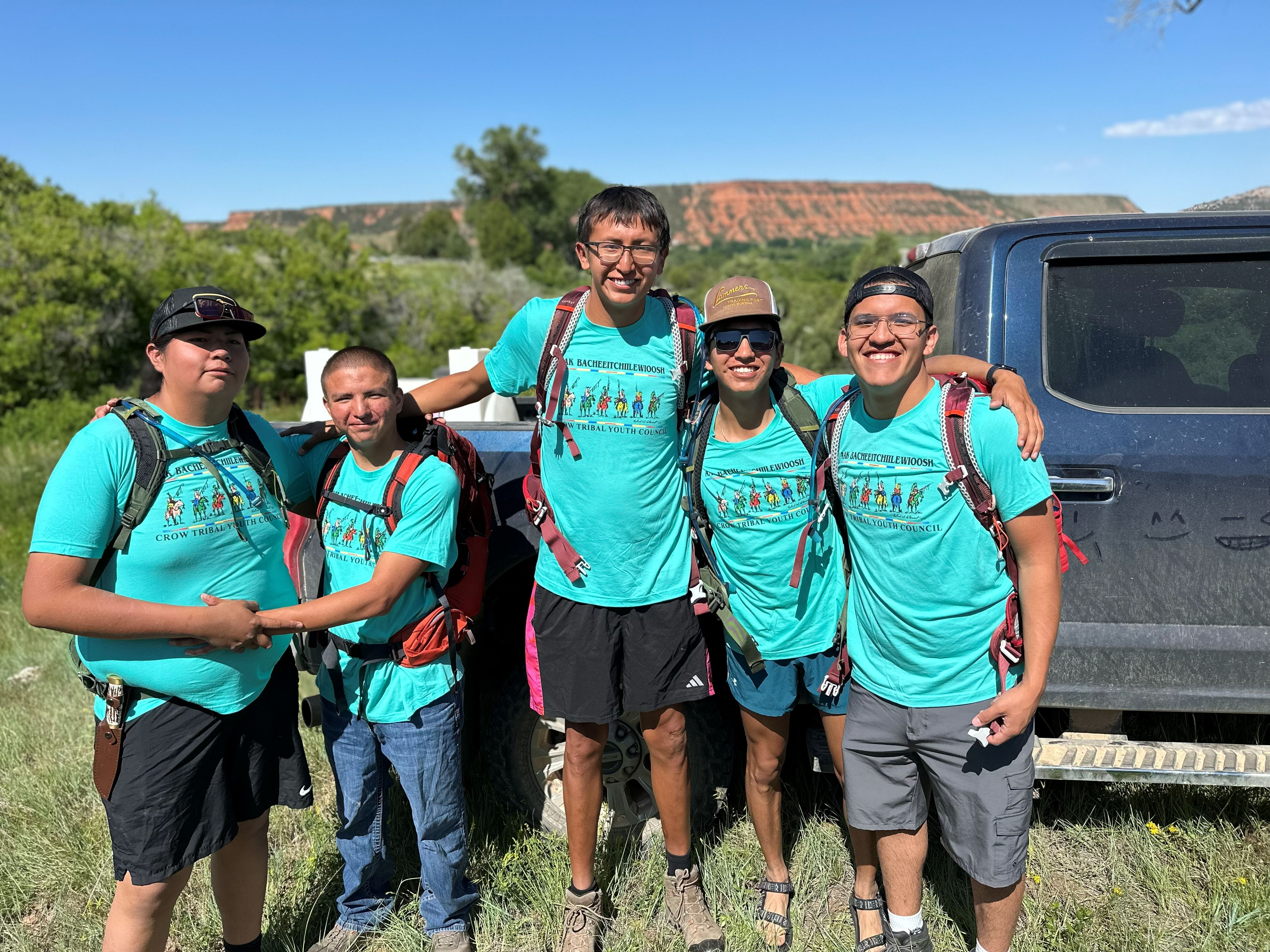
Crow Youth on a Quest
In the days when the Apsáalooke (Crow) people were still a nomadic Tribe, young warriors were sent on Vision Quests to seek strength and enlightenment from a higher power. The goal of this rite of passage was to accomplish the four deeds: touching an enemy, taking an enemy’s weapon, capturing an enemy’s prized horse and leading a war party.
Today’s youth may no longer face challenges like war and surviving a long winter, but their modern challenges are equally daunting, according to Noel Two Leggins, extension youth advisor at Little Big Horn College. He has led Vision Quests for young men and women at The Nature Conservancy’s Tensleep Preserve for the past three years.
“Their challenges are from forces like discrimination, bullying, substance abuse, suicide and a dysfunctional society,” explains Two Leggins.
Over four days, the youth are engaged in a mix of physical and spiritual activities—all aimed at reconnecting them to nature and their language and culture. Two Leggins says these kids have natural instincts embedded in their DNA through the millennia, and the Vision Quest helps them tap into this powerful force.
Two Leggins is “a strong believer in conservation, the world’s natural miracles and the great source of power from the Creator,” says Trey Davis, who manages Tensleep Preserve. “It’s a real honor to host him and these youth at Tensleep and I feel proud that TNC makes it a priority to support Indigenous-led conservation.”
The Crow lost all their traditional lands in Wyoming—their reservation is now entirely in Montana—which is another reason Two Leggins says this program is so important. “Through this partnership with The Nature Conservancy, we have access to some of our most sacred traditional lands here at Tensleep,” he notes.
Two Leggins is happy to report that 100% of the participants stayed in school, with a 3.5 grade-point average. Some have now gone on to college. “They’ve found their direction in life,” he says.
Our future depends on nature and on you.
In Wyoming, we are united by a powerful truth: nature is the foundation of our way of life. This common ground has enabled vibrant communities, generations old, to strengthen our economy through agriculture and energy production while conserving the state’s world-class big-game migrations and irreplaceable landscapes and waters.
