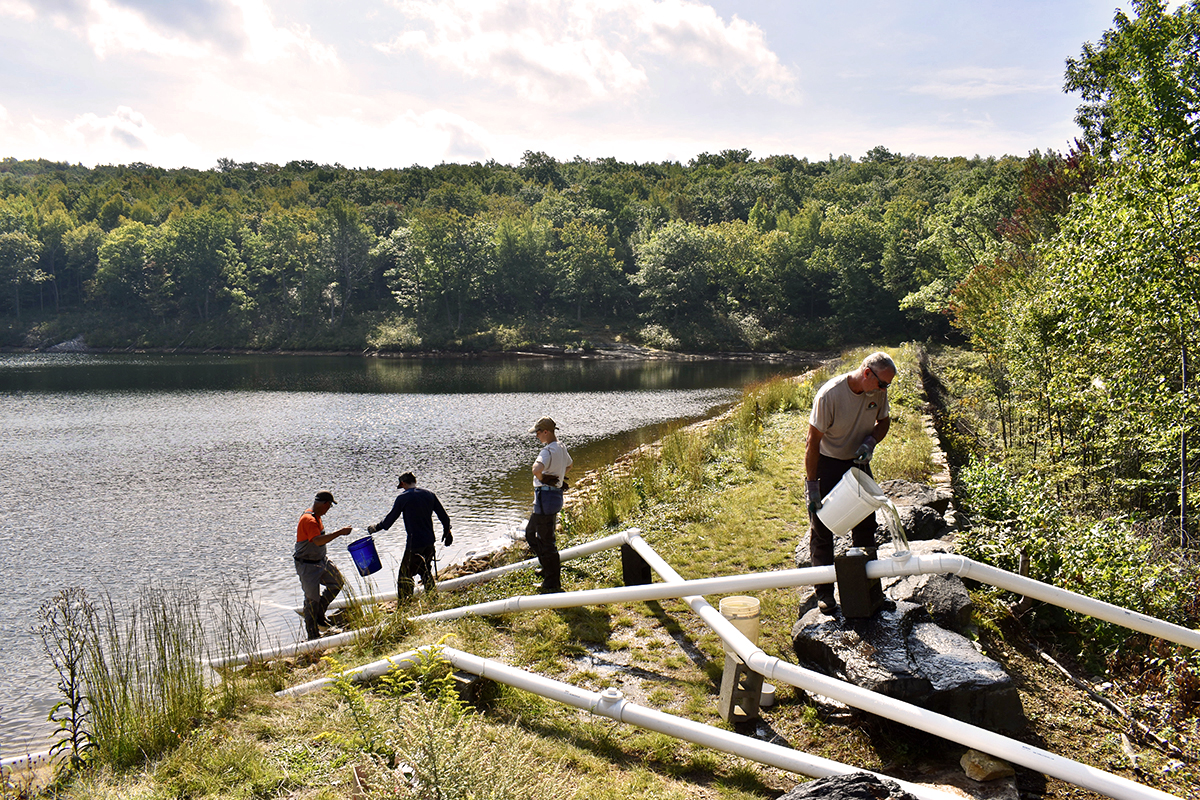
The O’Conner Reservoir dam has been regularly monitored by TNC and the State of Pennsylvania since TNC established Eales Preserve at Moosic Mountain in 2001. Signs of erosion and water moving through the dam were noted in 2020, requiring immediate short-term repairs and necessitating the lowering of water levels in the reservoir—a difficult and time-consuming task for our stewardship staff.
After three tropical storms passed through northeast Pennsylvania in the summer of 2021, it became apparent that the removal of the 128-year-old O’Conner Reservoir dam was necessary to address safety and liability issues. The breach of the O’Conner dam occurred in December 2021 and was authorized under emergency permit provisions.
When TNC acquires a parcel of land, we commit—both legally and ethically—to steward that land in perpetuity. TNC often acquires land that includes legacy infrastructure like homes, barns, bridges or dams. For TNC preserves that are open for recreation, public safety is the top stewardship priority.
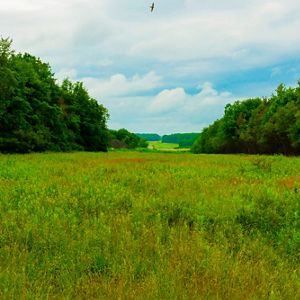
With the design, permitting and construction phases of the project completed this past winter, our freshwater conservation team has now turned its attention to restoration. The dam removal has created an opportunity to restore the original stream channel and floodplain at the bottom of the reservoir, which will create a more natural headwater habitat for Sterry Creek.
The stream channel is being allowed to form naturally through the previous reservoir area while the stream section running through the dam breach is designed to accommodate higher streamflows. The rock and soil material removed from the breach was placed on the upstream and downstream sides of the remaining intact sections of dam.
Visitors will be able to see the juxtaposition of our past and our future, as portions of the dam—including the stoned-lined spillway—remain intact, and pieces of the timber crib encountered during construction are on display, allowing for historical interpretation of the original dam and its construction.
Ecological benefits will continue to increase over time, as native vegetation becomes re-established in the former reservoir area; improvements in riverine, wetland and riparian habitats occur; and the movement of species between headwater and downstream reaches are restored.
Over the coming months, TNC will evaluate the necessity of further restoration efforts that enhance the ecological communities, wildlife and recreational assets of the preserve.